


Stormwater Management
Regulations keep tightening. Timelines keep shrinking. You need a partner who gets it and has for over 50 years. Jensen delivers engineered stormwater solutions from a family that's been building infrastructure since 1968.
Solutions:
Choose Your Solution
Three categories. One partner. Every project covered.


Detention
Manage Stormwater Storage
Underground vault and chamber systems for detention, retention, and infiltration. Manage peak runoff, meet storage mandates, and maximize buildable land.

Detention
Manage Stormwater Storage
Underground vault and chamber systems for detention, retention, and infiltration. Manage peak runoff, meet storage mandates, and maximize buildable land.
Treatment
Improve Water Quality
Separators, filters, and biofiltration to meet water quality permit requirements. NJDEP certified, TAPE approved, CA Water Board compliant.
Conveyance
Move Water Efficiently
Reinforced concrete pipe, box culvert, and drainage structures manufactured at Jensen plants across the West for fast, local delivery.
The Challenge
Every project is different, but the headaches are the same. Changing regulations, tight approval windows, and long lead times from manufacturers who don’t understand your local market. You shouldn’t have to chase drawings or explain your specs twice.
- Regulations shift faster than designs can keep up
- Generic solutions that don't fit your site constraints
- Weeks waiting for drawings and submittals
Why Engineers & Contractors Choose Jensen

Drawings in Days, Not Weeks
Our in-house engineering team turns around project-specific drawings and submittals faster than anyone in the West.

We're Where You Work
Arizona to SoCal to the Pacific Northwest. We know your regulations, municipalities, climate, and deadlines.

Family Owned Since 1968
Three generations of infrastructure builders. Your project is personal to us, not just a ticket number.
Stormwater Expertise
Real projects. Real results.
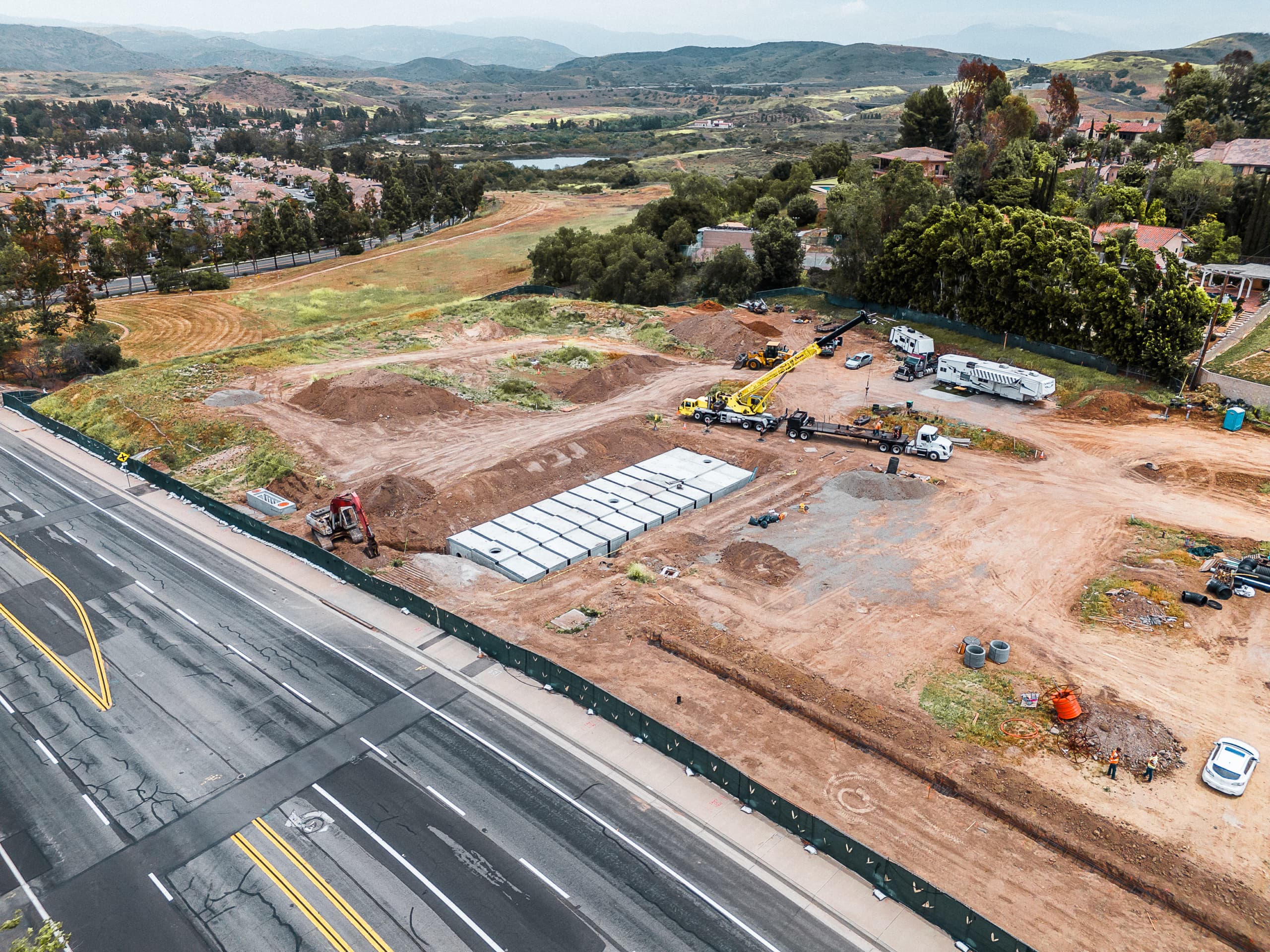
Santa Ana Development Selects StormVault Detention System
In sunny Southern California, land is as precious as it is finite. So, when the Cowan Ranch Estates, a new luxury residential project in Santa Ana, California, was being planned, developers knew they wanted to maximize buildable area.
Frequently Asked Questions
Stormwater runoff is managed by controlling where water goes, how fast it moves, how much is stored, and how clean it is before release or reuse. A complete stormwater strategy typically combines conveyance systems, detention or retention storage, infiltration, treatment, and controlled discharge to reduce flooding, erosion, and downstream impacts. EPA and ASCE both emphasize that effective systems often use a mix of gray infrastructure, green infrastructure, and natural processes to reduce runoff volume and improve water quality.
In practice, that may mean capturing runoff in underground storage, vaults, basins, permeable systems, or treatment structures; slowing peak flows; allowing water to infiltrate where soils permit; removing pollutants; and, where feasible, reusing stormwater for beneficial purposes. The best approach depends on site constraints, rainfall patterns, soil conditions, regulatory requirements, and downstream capacity, but the goal is always the same: turn stormwater from a liability into a managed resource.